AR Graffiti
AR graffiti turns street art into an interactive brand experience. Discover vetted augmented reality street art artists for campaigns that go beyond the wall.
Augmented Reality Street Art That Brings Walls to Life
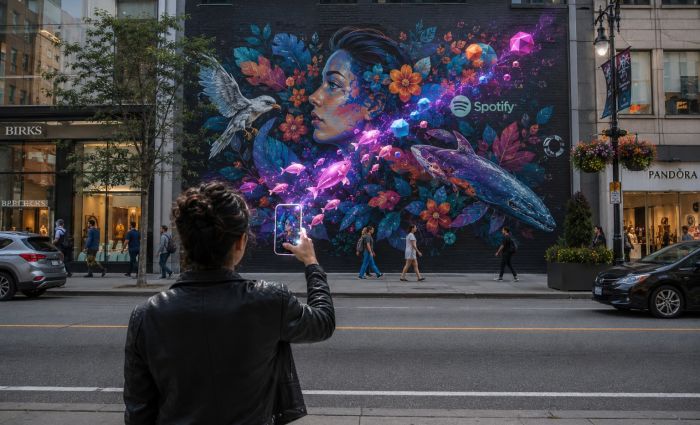
Point a phone at the wall and the artwork comes alive. AR street art campaigns turn passive viewers into active participants.
See more
Point a phone at the wall and the artwork comes alive. AR street art campaigns turn passive viewers into active participants.
See more
ARTISTS WHO OFFER THESE SERVICES
This is how it works
The artist selection on our platform is carefully curated so that we can guarantee maximum artistic quality when you book an artist through us.
DISCOVER & CONTACT
Use our search to discover the artists you like and send them an inquiry.
AGREE & CONFIRM
The artists will get back to you as soon as possible with their availability and prices. We ask for a small advance payment in order to reserve the artists - the rest can be paid once the job is finished.
Enjoy
Experience our fantastic artists. Sit back and enjoy the artistic experience, whether it is a living room concert, or a new painting on your wall.
Alternatively you can also contact us and we would be glad to help you find artists.
Expert tip
Augmented Reality graffiti done right: why the best campaigns live in two worlds simultaneously
![Expert tip]()

After working with brands on augmented reality activations across Europe's major cities, one thing becomes clear very quickly: the brands that get AR graffiti right are the ones that treat it as a content strategy, not a technology stunt.
Three things I always tell brands before an AR graffiti campaign:
- Design the digital experience before you design the wall. Most brands brief the mural first and bolt the AR on afterwards. That's backwards. The most effective AR graffiti campaigns are built the other way around — the digital experience determines what the wall needs to look like, where the triggers sit, and how passersby are guided to interact. Brief your Augmented Reality creative professional on the brand story you want to tell digitally first. The physical mural follows from that.
-
The mural is the media placement — the AR is the campaign. One of the most underused advantages of AR graffiti is permit flexibility. A mural painted as public art with minimal permit friction can carry a full commercial brand experience in its digital layer. The wall earns its place in the neighbourhood as culture. The brand campaign runs invisibly on top of it. This separation — physical art, digital brand — is not a compromise. It's a strategic advantage that traditional OOH cannot replicate.
-
Build for sharing, not just for scanning. The scan is the entry point, not the destination. Design the AR experience so that the moment of activation — phone raised, artwork coming alive — is itself worth filming and posting. The best AR graffiti campaigns generate organic social content from the audience, not just from the brand. That earned media extends campaign reach far beyond the physical location and turns a single wall/space into a distributed brand moment across multiple cities' social feeds.
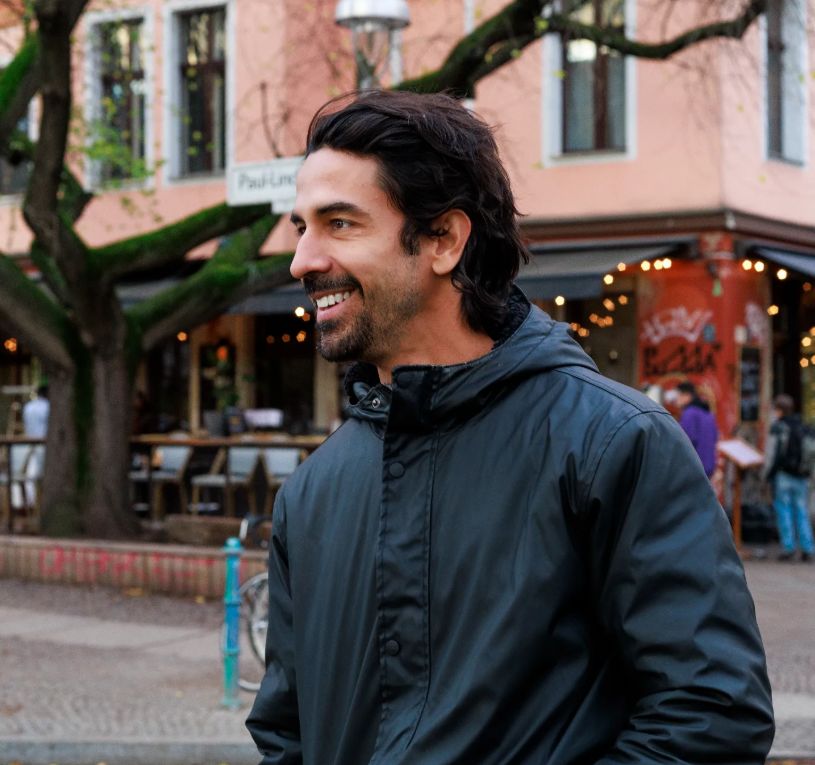
Mario Rueda, Co-founder · Book a Street Artist
FAQ
Everything You Need to Know About AR Graffiti
AR graffiti combines hand-painted street art with augmented reality technology. When viewed through a smartphone or tablet, the artwork comes alive — revealing animations, videos, or interactive digital content layered over the physical mural. Beyond artistic installations, AR is particularly powerful for activating murals and street advertising campaigns: a static wall becomes a dynamic brand channel that passersby can engage with, record, and share. The physical artwork stays in place as a permanent cultural presence; the branded digital experience runs in the virtual layer on top of it.
An artist creates the physical mural and embeds AR triggers into the design. Passersby scan the wall with their phone and the digital layer activates — no app download required in most cases. The experience can be customised to show brand content, product launches, or storytelling sequences. A well-known example: Nike used AR-activated murals in several cities to launch a sneaker collection — scanning the wall revealed an animation of the shoe being built, with a direct link to purchase. The physical mural drove foot traffic; the AR layer drove conversion.
Augmented Reality graffiti combines the stopping power of street art with the measurability of digital advertising — something traditional OOH cannot offer. Key benefits: audiences engage, record, and post, turning a single wall into a social media moment that extends reach far beyond the physical location. The mural stays as a permanent piece of art and cultural presence; the branded campaign runs entirely in the virtual layer — meaning less permit friction than traditional advertising murals. And unlike a billboard, AR experiences generate trackable engagement data: scans, dwell time, click-throughs, and shares — giving brands real metrics to evaluate campaign performance.
Brands should budget a minimum of €10,000 for a basic AR graffiti implementation — this covers the development of a simple Augmented Reality experience. Costs scale significantly with the complexity of the digital experience, the quality of the physical mural, and whether a physical space needs to be rented. A mural on a private wall, a floor installation in a high-footfall retail space, or a licensed public area all carry different rental and permit costs on top of production. Campaigns combining a large-format mural with a sophisticated AR experience in a premium city location can run into six figures. Contact artists directly through the platform for tailored quotes based on your brief.
Not necessarily — you need a surface or a physical anchor, but that can take many forms. Walls are the most common, but floors, posters, flyers, packaging, and even windows can serve as AR trigger surfaces. Anything a phone camera can scan can activate an AR experience. Beyond physical surfaces, GPS-based AR removes the need for a physical trigger entirely: a brand can fence a geographic area so that anyone who enters that zone and opens their camera is immersed in an augmented brand experience — no wall, no poster, no scan required. This opens up possibilities in public squares, event spaces, retail districts, and outdoor venues.
In most cases, a standard smartphone camera is enough. Some experiences use a dedicated app, while others are entirely web-based and activate directly through the phone's browser — making them accessible to the widest possible audience without any download friction. For GPS-based AR experiences, no scan is required at all — the experience activates simply by being in the designated location with the camera open. The right technology choice depends on the complexity of the experience and the target audience — your creative professional will advise on the best technical approach for your campaign.
It depends on the physical component. The AR digital layer itself requires no permit — it exists only in the virtual world. What may require permits is the physical surface: painting a mural follows the same permit rules as any wall painting, and renting floor space or a public area may require local authority approval. The key advantage of AR graffiti is that the branded campaign lives digitally — meaning a mural painted as public art with minimal permit requirements can still carry a full commercial AR experience. This gives brands significantly more flexibility than traditional OOH in permit-heavy cities.
Augmented reality advertising overlays digital content — animations, videos, 3D objects, interactive experiences — onto the physical world through a smartphone camera. It turns passive viewers into active participants: the audience chooses to engage, dramatically increasing attention and recall. For brands: higher engagement than static OOH, measurable interactions, shareable content, and a technology-forward brand signal. Combined with street art — which already carries cultural credibility — AR advertising is simultaneously disruptive, measurable, and brand-appropriate.
Post a job
Describe your project in minutes - it's quick and easy. We'll let you know when artists who are a good fit are interested.